


How to Choose the Right Brushless Motor for Your Washing Machine
 Apr 07, 2026|
 View:742
You want your washing machine to work well and last long. Picking the right brushless motor is very important. Manufacturers check how the motor works, how long it lasts, its effect on the environment, and its price.
Criteria | Description |
|---|---|
Performance Requirements | Look for motors that save energy and work well in washing machines. |
Duty Cycle Analysis | Check how the motor works in different situations. |
Environmental Impact | Think about how the motor helps the planet and if it is eco-friendly. |
Economic Analysis | See if the motor is worth the money and gives good value. |
You need to match the motor’s type, size, and power to your machine. Brushless dc motor technology is more efficient, quieter, and lasts longer than brushed motors. Look at the features and specs carefully. Avoid mistakes so your washing machine works well.
Benefit | Brushless Motors | Brushed Motors |
|---|---|---|
Efficiency | More efficient because there is less friction | Less efficient because brushes cause friction |
Lifespan | Lasts longer with less damage | Does not last as long because brushes wear out |
Maintenance | Needs less fixing | Needs fixing more often |
Noise | Runs quietly | Makes more noise because of brushes |
Key Takeaways
Pick a brushless motor for better work and longer use. These motors use less energy and need less fixing.
Make sure the motor fits your washing machine’s needs. Check the voltage, power, and size to see if they match.
Think about what kind of washing machine you have and how much it holds. Bigger machines need motors with more strength and balance.
Find motors that have inverter technology. This feature changes speed for each load, saves energy, and keeps your clothes safe.
Always look at the motor label closely. Knowing the details helps you avoid mistakes and makes sure it fits well.
Know Your Washing Machine Needs
Machine Type and Load
It is important to know your washing machine’s type and how much it can wash. Washing machines come in many types, like top-load, front-load, compact, and large capacity. Each type has a different drum size and can hold different amounts of laundry. You can find this information in your machine’s manual or on a label inside the door.
Here is a table that shows the usual load sizes for each washing machine type:
Type of Washing Machine | Typical Load Capacity |
|---|---|
Compact Washers | 2.30 - 2.45 cubic feet |
Top-load Washers (Standard/HE) | 3.1 - 4 cubic feet |
Front-loading Washers | 4.2 - 5 cubic feet |
A small tub can hold up to 14 pounds of clothes. A big tub can hold up to 25 pounds. If you have a large family, you might need a bigger washer. The load size changes what kind of brushless motor your washer needs. Bigger loads need more torque and steady speed. The motor also needs to move the heavy drum and change speeds fast without getting too hot.
Aspect | Description |
|---|---|
Torque Requirements | High torque at low speeds is essential for washing machines to handle varying loads. |
Speed Stability | The motor must maintain stability during high spin speeds. |
Inertia Management | Must manage high inertia loads due to the rotating drum to prevent overheating. |
Acceleration/Deceleration | Requires careful consideration of acceleration and deceleration torques. |
Tip: Always pick a motor that matches your washer’s size for the best results.
Voltage and Power
You should check your washing machine’s voltage and power before picking a motor. Most machines in the United States, Canada, and Japan use 110-120 volts. In Europe, Asia, and Australia, they use 220-240 volts. Using the wrong voltage can break your machine or make it unsafe.
Region | Voltage (V) |
|---|---|
United States | 110-120 |
Canada | 110-120 |
Japan | 110-120 |
Europe | 220-240 |
Asia | 220-240 |
Australia | 220-240 |
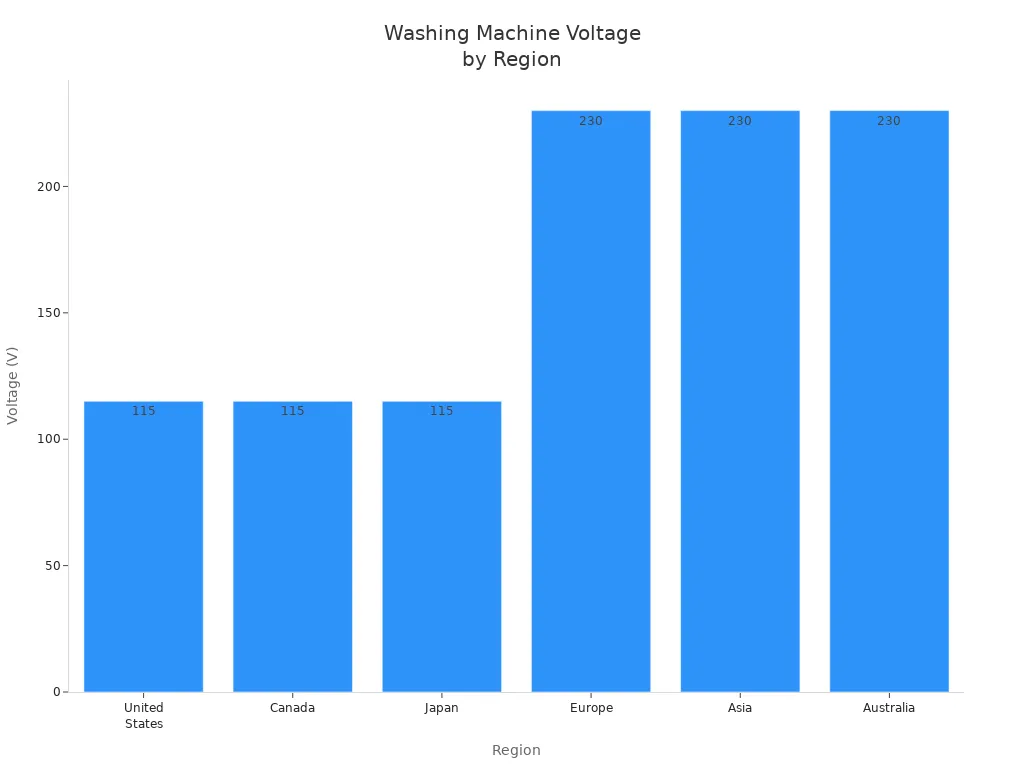
You can find the voltage on your washer’s label, usually on the back or inside the door. Make sure the new motor matches your area’s voltage. This step keeps your washer safe and helps it work well.
Brushless Motor Features
Efficiency and Inverter Tech
You want your washing machine to use less energy. A Brushless Motor with inverter tech helps you save power and water. This motor changes its speed to fit the load. It never uses more energy than needed. You get clean clothes and pay less for bills. Inverter tech makes the motor start and stop smoothly. This keeps your clothes safe and protects the machine.
Note:Brushless DC motors use less energy than old induction motors. This is better for the planet and saves you money.
Motor Type | Energy Consumption | Environmental Impact |
|---|---|---|
Induction Motors | Higher | Less sustainable because they use more energy |
Brushless DC Motors | Lower | More sustainable because they save energy |
Durability and Lifespan
You want your washing machine to last a long time. A Brushless Motor does not have brushes that wear out. This means you fix your machine less often. Many companies give warranties for 10–12 years. Good bearings can last over 10,000 hours. You spend less money on repairs and enjoy a reliable washer.
No brushes means the motor lasts longer.
You do not need as much maintenance.
Yearly maintenance costs are lower than brushed motors.

Noise and Vibration
Some washing machines are very loud. A Brushless Motor runs quietly because it has no brushes. The motor moves smoothly, so you hear less vibration. Electronic controls help keep the noise low. The washing process is gentle.
Less friction means less noise.
Smooth movement lowers vibration.
The motor can change speed to stay quiet.
Speed Control
You want your washer to handle all kinds of laundry. A Brushless Motor with speed control lets the machine change speed for each wash. This saves energy and keeps your clothes safe. Smooth starts and stops help the motor and drum last longer.
The motor changes speed for the load.
Energy and water use stay low.
Gentle starts and stops protect your clothes and machine.
Matching Brushless Motor Specs
Reading Labels
When you look at a motor for your washing machine, you will see a label or a data sheet. This label gives you important information. You need to read it carefully to make sure the motor will work with your washer. The label often shows the model or product code, the power output, voltage, frequency, speed, and other details. You can also find the manufacturer’s name and protection rating. These details help you pick the right motor and avoid problems.
Tip: Always check the label before you buy a new motor. If you do not understand a part of the label, ask the seller or look in your washing machine manual.
Understanding Specs
You need to know what each part of the label means. Here is a table to help you understand the most common motor specifications:
Specification | Description |
|---|---|
Model / Product Code | Tells you the motor series and design. Use this for product support and finding replacements. |
Rated Output Power (kW/HP) | Shows how much power the motor can give. Match this to your washing machine’s needs. |
Rated Voltage (V) | The voltage the motor needs. Make sure this matches your home’s power supply. |
Rated Frequency (Hz) | The frequency the motor uses. This is important for different countries and regions. |
Speed (RPM) | How fast the motor spins at full load. Your washer needs a certain speed to clean clothes well. |
Efficiency Class | Tells you how much energy the motor saves. Higher efficiency means lower energy bills. |
Protection Rating | Shows how well the motor is protected from dust and water. Important for wet laundry rooms. |
Manufacturer Info | Lets you know who made the motor. This helps with quality and getting help if needed. |
You should match the rated voltage and frequency to your home’s power. The output power and speed should fit your washing machine’s size and type. A higher efficiency class saves you money over time. The protection rating keeps the motor safe in damp places.
Sizing Guide
Picking the right size motor is very important. If you choose a motor that is too small, your washing machine may not work well. If you pick one that is too big, you might waste energy and money. Here is a simple guide to help you:
Check your washing machine’s manual. Find the recommended motor power and speed.
Match the voltage and frequency. Make sure the motor fits your home’s power supply.
Look at the load size. Bigger washers need motors with more power and higher torque.
Check the fit. The motor must fit in the space inside your washing machine.
Think about the environment. If your laundry room is damp, pick a motor with a high protection rating.
️ Note: If you are not sure about the right size, ask a professional or the seller. Using the wrong motor can damage your washing machine.
A Brushless Motor with the right specs will help your washer run smoothly, save energy, and last longer. Always compare the label on the motor with your washing machine’s needs before you buy.
Mistakes to Avoid
When picking a Brushless Motor for your washing machine, you should be careful. Some mistakes can cause big problems later. Many people miss important details. This can make the motor not work well or break early. You can save money and time if you learn about these mistakes first.
Here is a table that lists common mistakes and what happens if you make them:
Mistake | Implication |
|---|---|
Poor grounding | Can cause electrical problems and waste energy. |
Thermal cycling | May make motor parts wear out too soon. |
Cable management | Bad cable setup can damage the motor or make it work wrong. |
Software misconfiguration | Wrong settings can cause motor troubles. |
Inadequate maintenance | Not taking care of the motor can make it fail. |
You should also look for these problems:
Bad materials can make insulation weak.
Poor quality checks can give you bad bearings.
Weak magnet bonding can make the motor break early.
You can stop compatibility issues by doing a few easy things. Always check the motor specs and make sure they fit your washing machine. Double-check model numbers and use maker databases to confirm the match. Pick motors from trusted sellers with good ratings. Before buying, ask the seller with your model number to check if it fits. If you do not know about the shaft or mounting, ask for size drawings. Compare part numbers with your washing machine’s manual to make sure you have the right one.
Tip: Doing these steps helps you avoid expensive mistakes and keeps your washing machine working well for a long time.
Where to Buy & What to Ask
You want a Brushless Motor that works well and lasts long. Look for companies that do research and make new products. These companies use the latest technology. They make high-quality motors for washing machines. They care about new ideas and what customers want. You can trust them to follow strict rules. Many good sellers focus on Brushless Motors for home appliances. They make motors that work well and are dependable.
When you shop, ask the seller about the warranty and help. You need to know what happens if the motor breaks. Most sellers give a warranty for their motors. The table below shows common warranty facts:
Warranty Aspect | Details |
|---|---|
Warranty Period | 30-day warranty against manufacturer's defects for motors, servos, and speed controllers. |
Return Shipping Responsibility | The buyer is responsible for return shipping. |
Warranty Service Time | Allow 2-4 weeks for warranty service. |
Coverage for Repairs/Replacements | If deemed a warranty, the item will be repaired or replaced with the same or equivalent model. |
Validity of Warranty | Warranties are only valid for the original purchaser. |
Exclusions from Warranty | Signs of abuse, overuse, alterations, or modifications void the warranty. |
Specific Exclusions for Motors | Brushless motor sensor board deviations and rotor asymmetry are not covered under warranty. |
Wear Items | Sensor boards and motor bearings are considered wear items. |
Abuse Examples | Snapped shafts, delamination, or cracking of rotors are not covered under warranty. |
Tip: Always ask about the warranty before you buy. Make sure you know what is covered and what is not.
You should also ask these questions: Does the motor fit your washing machine? How long should the motor last? Can you get replacement parts easily? Is there help if you have problems?
If you check these things, you can buy with confidence. You will know your motor is good and you can get help if needed.
To pick the right Brushless Motor, do these things: First, check how much laundry your machine can wash. Next, figure out how much power and torque you need. Then, see what speed your washer needs. Also, think about your laundry room and if it is damp or dry. Try to find motors that use less energy. Choose the best drive technology for your washer. Make sure the motor fits your budget.
If you know about motor specs and features, you can match the motor to your daily needs. You will feel good about your choice. Your clothes will get cleaner and you will save energy.
Ask questions and try not to make mistakes. This helps you pick a smart and reliable motor.
FAQ
What is a brushless motor?
A brushless motor uses magnets and electronics to spin. You do not need brushes. This makes the motor last longer and run quietly. You get better energy savings.
How do I know if a brushless motor fits my washing machine?
Check your washing machine’s manual or label. Match the voltage, power, and size. Ask the seller if you feel unsure. You can also compare part numbers.
Why should I choose a brushless motor over a brushed motor?
You get less noise, longer life, and lower energy bills. Brushless motors need less fixing. They work better for modern washing machines.
Can I install a brushless motor myself?
You should ask a professional to install the motor. This keeps you safe and protects your washing machine. Wrong installation can cause damage.
How do I maintain a brushless motor?
You should keep the motor clean and dry. Check for loose wires. Listen for strange sounds. If you see a problem, call a repair expert.


