


What is a Brushless DC Motor and How Does It Work
 Apr 29, 2026|
 View:535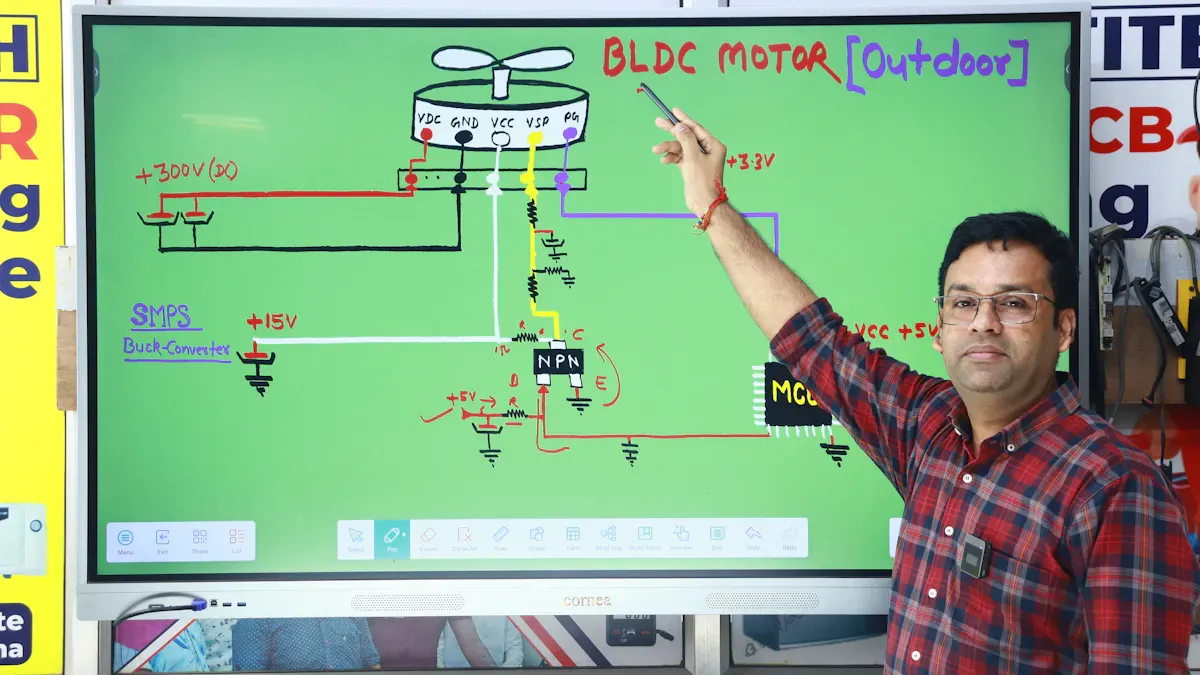
You might wonder, What is Brushless DC Motor? How does it work? A brushless DC motor is a type of electric motor that uses magnets and an electronic controller instead of brushes. This setup allows the motor to spin smoothly without the friction and wear caused by brushes. Because of this design, brushless DC motors offer smoother movement and experience less damage over time. What is Brushless DC Motor? How does it work? The motor is made up of three main parts: the stator, the rotor, and the controller. Here’s how each part plays a role in the motor’s operation:
Component | Description | Contribution to Operation |
|---|---|---|
Stator | Built from thin steel layers with wire windings arranged in star or delta shapes | The stator creates a rotating magnetic field, which interacts with the rotor to make the motor turn. |
Rotor | Contains permanent magnets and various numbers of poles | The rotor’s magnets respond to the stator’s magnetic field, affecting the motor’s strength and speed. |
What is Brushless DC Motor? How does it work? Brushless DC motors are more efficient and durable than traditional brushed motors. You’ll find them in electric vehicles, drones, and household appliances. In 2024, the global market for brushless DC motors reached $20,990.5 million and is expected to grow even more by 2030. If you’re looking for a reliable, low-maintenance option, brushless DC motors are a smart choice.
Key Takeaways
Brushless DC motors use electronic controllers, not brushes. This means there is less friction. The motors last longer because of this.
These motors are more efficient. They use about 85% to 90% of energy. This helps you save money on electricity.
Brushless motors need very little maintenance. They do not have parts that wear out fast, like brushes.
You can control the speed and torque of brushless motors easily. This makes them great for jobs that need accuracy.
People use these motors in electric vehicles, drones, and home appliances. This shows they are useful and dependable.
What is Brushless DC Motor?
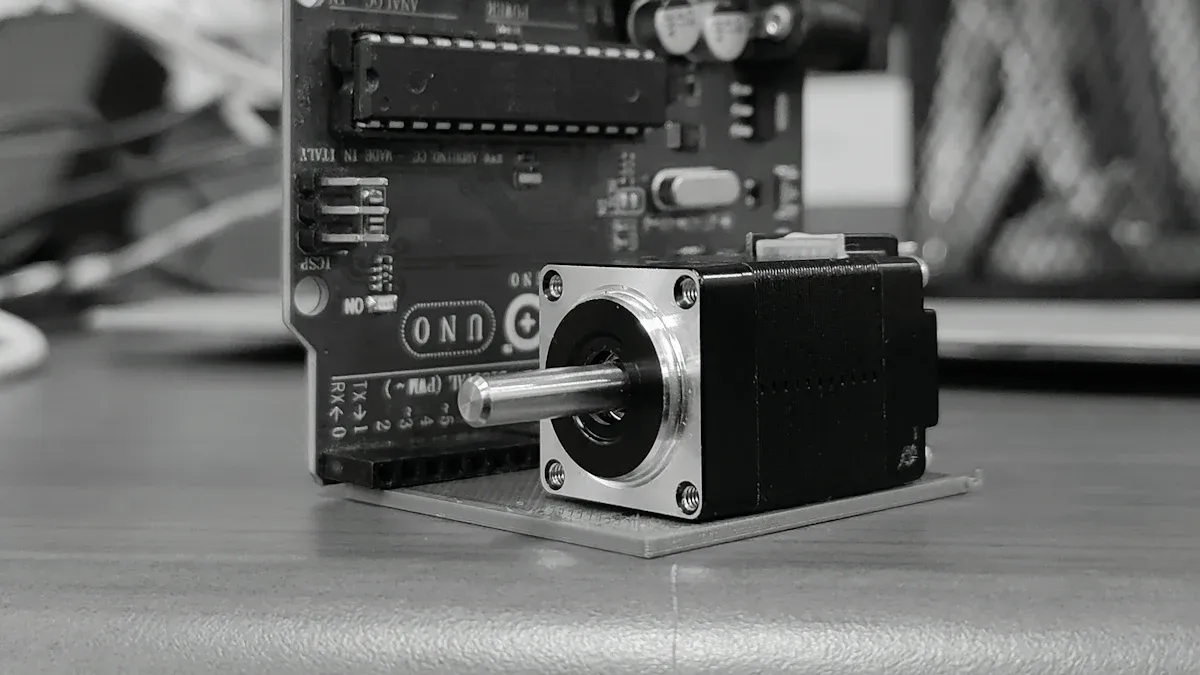
Basic Definition
You may ask, what is brushless dc motor? how does it work? A brushless dc motor uses an electronic controller instead of brushes. This controller helps the motor spin. You do not need to worry about parts wearing out fast. The motor has permanent magnets that move around wires called the stator. The controller sends power to the wires at the right time. This makes the motor turn smoothly and use energy well.
Brushless DC motors use an electronic controller instead of brush contacts. This means there is less friction and the motor lasts longer. Permanent magnets spin around a fixed armature. This removes problems with connecting power to moving parts. The controller manages power to the windings. This gives better efficiency and less mechanical wear than brushed motors.
When you use a brushless dc motor, it runs quietly and lasts longer than older motors. You can find these motors in many things, like drones and electric cars. People ask, what is brushless dc motor? how does it work? This technology has changed how machines move and work.
Key Differences from Brushed Motors
You might wonder how brushless motors are different from brushed motors. The main difference is brushless motors do not have brushes. Brushes are small parts that touch moving pieces in brushed motors. These brushes wear out and need to be replaced. Brushless motors do not have these parts. They last longer and need less care.
Here is a table that shows the main differences between brushed and brushless motors:
Feature | Brushed Motors | Brushless Motors |
|---|---|---|
Maintenance | Requires frequent brush replacement | Minimal maintenance required |
Operating Life | 1,000 to 8,000 hours | 10,000 to 100,000 hours |
Energy Efficiency | 75% to 80% | 85% to 90% |
Speed & Acceleration | Limited by brushes and commutator | Higher speeds and better acceleration |
Torque | Lower torque control | Higher torque control |
Weight & Size | Heavier and bulkier | Lighter and more compact |
You can see some important facts about brushless motors:
They do not have brushes or commutators, so there is less friction.
They last longer because there are fewer parts to break.
They use energy better, so you get more power for less electricity.
In brushed dc motors, rotation happens when a stationary magnet interacts with a moving armature using brushes and a commutator. Brushless dc motors change this design. The permanent magnets are on the rotor. The copper windings stay on the stator. An electronic controller switches the power. You do not need mechanical parts to do this job.
Brushless dc motors do not have brushes that wear out. They have fewer moving parts, so there is less friction and heat. This design gives you a motor that lasts longer and needs less care. You only need to check the bearings sometimes, instead of replacing brushes or cleaning dust.
Components
When you look inside a brushless motor, you find three main parts: the stator, the rotor, and the electronic controller. Each part has a special job that helps the motor spin smoothly and efficiently.
Stator
The stator sits on the outside of the motor. It holds the wire windings that create a magnetic field when electricity flows through them. The stator is usually made from laminated steel. This material helps the motor work better by reducing energy loss and making the magnetic field stronger. You can see how different stator materials affect performance in the table below:
Material Used | Performance Impact |
|---|---|
M19 Electrical Steel | High torque and stable operation with low energy loss. |
1010 Low-Carbon Steel | Slightly less torque but still good performance. |
Magnetic PLA | Very low torque and high ripple, not good for most uses. |
ABS | Almost no torque, not suitable for motors. |
Hybrid Configurations | Better than PLA, but not as good as steel. |
The way the stator is built also matters. If you use a star or delta winding, you can change how much torque the motor gives at different speeds. A good stator design means your brushless motor will run smoothly and last longer.
Rotor
The rotor is the part that spins inside the motor. It holds strong permanent magnets. The number of magnets, or poles, changes how the motor works. If you have more poles, you get more torque, but the motor may not spin as fast. The type of magnet also matters. Stronger magnets give you more power. The rotor and stator work together to turn electricity into motion.
Electronic Controller
The electronic controller acts like the brain of your brushless motor. It decides when to send power to each part of the stator. The controller uses sensors or special signals to know where the rotor is. This helps the motor spin at the right speed and with the right force. Unlike old motors that use brushes, the controller does this job electronically. This makes the motor more efficient and gives you better control. Some controllers even let you change the speed or check for problems in the motor.
Tip: Advanced controllers use smart chips to make the motor even more efficient and reliable.
When you put all these parts together, you get a brushless motor that is powerful, quiet, and long-lasting.
How Does It Work?
Electronic Commutation
You might ask, what is brushless dc motor? How does it work? The main idea is electronic commutation. Brushless motors do not use brushes or a commutator. They have an electronic controller that acts like the brain. This controller switches the current in the windings at the right time. Sensors inside the motor check where the rotor is. The controller uses this to send power to the correct winding. This keeps the motor spinning smoothly.
Step | Description |
|---|---|
1 | The motor gets power. |
2 | Electronic commutation starts to control the motor. |
3 | Sensors find the rotor’s position for control. |
4 | Current flows in the windings to make a magnetic field. |
5 | The magnetic field pulls on the rotor’s magnets and makes motion. |
6 | The motor turns and creates movement. |
Brushless dc motors use a six-step electronic commutation system. The controller manages the current flow to make a magnetic field in the stator. Pulse Width Modulation (PWM) helps keep the motor efficient. This design removes friction and mechanical wear. You save energy and need less maintenance.
If you want to save energy, brushless motors are better. They are more efficient than brushed motors.
Interaction of Magnetic Fields
Brushless dc motors work by using magnetic fields to make motion. The stator makes a spinning magnetic field. The rotor has permanent magnets. When the controller sends current to the stator windings, the magnetic field pulls the rotor’s magnets. This force makes the rotor spin. Torque is made as the rotor lines up with the stator’s field.
Brushless motors make alternating current in the stator windings.
This current interacts with the rotor’s magnets to make motion.
The magnetic fields can attract or push, causing movement.
The controller can change the current to set torque and speed.
Brushless precision torque motors give you good control. You can change speed and torque easily. These motors do not slip, so they run smoothly. Electronic controllers set speed and torque. This makes the motor work well and last longer.
Brushless dc motors are 15-20% more efficient than brushed motors. You save energy and lower costs. No brushes means less friction and heat. You get higher efficiency, especially when the load is low. Brushless precision torque motors work well in tough jobs.
Tip: Brushless precision torque motors are great for jobs needing high accuracy and smooth motion, like robots and medical devices.
You might ask, what is brushless dc motor? How does it work? The answer is in the smart design. Brushless motors use electronic controllers and magnetic fields to make torque and motion. You get a motor that is efficient, accurate, and lasts a long time.
Advantages and Applications
Benefits Over Brushed Motors
Brushless dc motors have many good points compared to brushed motors. They are very efficient, last a long time, and give you exact control. Here are some main benefits:
Brushless dc motors are 85% to 90% efficient. This saves energy and keeps heat and noise low.
You do not need to change brushes. This means less work and less time fixing the motor.
Brushless motors last longer. They can run for more than 1 million cycles. Brushed motors need new parts more often.
You get better torque control. The electronic controller lets you change speed and torque easily.
Brushless motors help batteries last longer in electric cars and tools.
These motors are quiet and smooth. They are good for places where noise is a problem.
Tip: Brushless dc motors are strong. They can handle lots of power without getting too hot. You can use them for many hours without worry.
Common Uses
Brushless motors are used in many machines and devices. The main uses for brushless motors are in homes, factories, and cars. Here is a table that shows where you can find them:
Application Area | Examples |
|---|---|
Consumer Electronics | Computer hard drives, CD/DVD players, cooling fans, cordless tools, drones |
Automotive | Electric vehicles, hybrid vehicles, power steering, pumps |
Industrial Automation | Robotics, manufacturing lines, conveyor systems |
You also see brushless dc motors in air conditioners, refrigerators, cell phones, and office machines like printers and fans. In cars, these motors power electric vehicles and help cut repair costs by up to half. Drones use brushless motors to fly smoothly and respond fast.
Brushless dc motors are important in clean energy. They help wind turbines and solar panels make more power. Using brushless motors helps the planet because they use less fossil fuel and lower greenhouse gases.
The main uses for brushless motors need high efficiency, strong torque, and steady performance. Brushless motors give you all these good things. If you want a motor that saves energy, lasts a long time, and gives you exact control, brushless dc motors are a smart pick.
You have learned that brushless dc motors use electronic controllers to make things move. These motors give strong torque. They last a long time and run quietly. You do not need to fix them often. Brushless dc motors are small and use energy well. Many companies pick brushless dc motors because they give exact torque and smooth control.
Main benefits:
Strong torque and good efficiency
Quiet running
Long life
Little maintenance
Works well in many places
Parameter | Brush DC Motor | Brushless DC Motor |
|---|---|---|
Efficiency | 75–85% | 85–95% |
Typical Lifespan | 1,000–3,000 h | 10,000–20,000+ h |
Maintenance | Regular | Minimal |
Pick brushless dc motors if you want steady torque and to save energy for your next project.
FAQ
What makes a brushless DC motor different from a brushed motor?
You do not find brushes in a brushless DC motor. The motor uses an electronic controller instead. This design gives you less friction, longer life, and better energy use.
Can you control the speed of a brushless DC motor?
Yes, you can control the speed easily. The electronic controller lets you set the speed and change it quickly. You get smooth and precise movement.
Where do you see brushless DC motors in daily life?
You see these motors in drones, electric cars, fans, and even computer hard drives. Many home appliances use them because they are quiet and efficient.
Do brushless DC motors need much maintenance?
You do not need to do much maintenance. The motor has fewer parts that wear out. You only need to check the bearings sometimes.
Are brushless DC motors safe to use?
Yes, brushless DC motors are safe. The electronic controller protects the motor from overheating. You get reliable and safe operation in most devices.


