


Custom Frameless Motors for Wholesale: How to Navigate Voltage, Torque & Dimension Customization
 Oct 08, 2026|
 View:8
Three main factors shape every frameless motor order: voltage, torque, and dimensions. Buying wholesale adds pricing, MOQ, and lead-time pressure on top of these technical choices. You must specify all three parameters together. Looking at them alone leads to redesigns, returns, and lost profit. The global frameless motor market shows this growing demand, with projections showing growth through 2030. This article walks through each parameter with practical selection criteria and supplier questions. You will learn how to build a wholesale checklist that keeps your custom motors on budget and on schedule. Your precision needs require a partner who understands how voltage, torque, and dimensions work together. Custom frameless motors for wholesale succeed when you plan as a whole.
Key Takeaways
Voltage, torque, and dimensions are connected. To make a custom motor that works, you must choose all three.
Make sure the voltage fits your drive and insulation. This stops overheating and drive problems.
Pick the right torque for actual loads using RMS torque. Test a prototype to keep it from overheating.
Adjust the size to fit your machine. Check the stack length and air gap for the best performance.
Plan for wholesale prices and wait times. Ask about MOQs and prototypes before you order.
Voltage Customization for Frameless Motors
Voltage is the first lever you adjust when specifying a frameless motor for wholesale. Sunrise Electric Motor offers frameless motors with voltage options of 24V, 36V, 48V, and up to 325VDC. These motors rely on external drives for power and control. You cannot treat voltage as a standalone number. It interacts with your drive, your winding, and your insulation system. Get this wrong, and you face overheating, drive faults, or a motor that simply will not perform.
Assessing Available Voltage and Drive Compatibility
Your drive defines the voltage window your frameless motor must operate within. Common bus voltage levels for frameless servo systems include 48 VDC and rectified 220 VAC or 400 VAC mains. Each level brings different trade-offs. A 48 VDC bus suits compact designs with moderate speed and current demands. If your motor runs too fast or draws too much current at this voltage, you need a custom winding. Higher bus voltages from rectified mains support more power but demand more insulation.
Bus voltage level | Supporting detail |
|---|---|
48 V DC | Described as a DC bus limit for frameless servo motors; if a motor is too fast or draws too much current at this voltage, custom winding may be needed. |
Rectified 220 V AC / 400 V AC mains | Described as the supply used for a high-voltage servo drive with custom-wound frameless motors. |
Select a power supply and drive with a 25% buffer above undervoltage and overvoltage thresholds. This headroom protects your system from voltage spikes and sags. In vertical-axis or deceleration-heavy cycles, regenerative braking must be handled by a built-in or external braking resistor. Without this, the DC bus voltage rises and triggers overvoltage faults. Practical bus-voltage selection depends on application headroom and regenerative-control capability, not only on a nominal voltage rating.
You must confirm three things before you request a custom winding. First, check your drive bus voltage. Second, verify the PWM frequency your drive uses. Third, confirm the insulation class your application requires. These three parameters determine whether a standard winding works or whether you need a custom design. Skipping this step leads to performance gaps and potential failures.
Custom Windings and Insulation Options
Voltage customization happens through user-specific windings matched to your drive and application. The winding determines how the motor performs at your chosen voltage. A winding designed for 48V will not work optimally at 325VDC. You need a supplier who understands this relationship and can tailor the winding to your exact requirements.
Insulation becomes critical as voltage rises. For custom frameless motor windings operating above 48 VDC in industrial applications, you need an insulation system rated for inverter duty and compliant with IEC 60034-18-41. This standard covers qualification and type tests for Type I electrical insulation systems used in rotating electrical machines fed from voltage converters. Several components work together to prevent failure:
Insulation system class must be explicitly rated for inverter duty and compliant with IEC 60034-18-41.
Magnet wire enamel requires corona-resistant (CR) enamel, such as polyimide with nano-fillers, to prevent partial discharge breakdown.
Slot liner material uses triple-layer laminates such as NMN to increase dielectric strength to ground.
Phase-to-phase insulation needs mandatory high-grade phase separators, such as Nomex, to prevent shorts between adjacent phases.
Potting or encapsulation uses VPI or void-free epoxy potting to eliminate air pockets where corona discharge occurs.
Inverter compatibility must be SiC and GaN ready, tolerating dV/dt above 10 kV/µs.
Testing follows IEC 60034-18-41 and IEC 60034-27-5, including Partial Discharge Inception Voltage (PDIV) testing.
Supplier evidence package includes PDIV test record, insulation material stack, potting process notes, and drive/cable assumptions.
The difference between standard and high-voltage frameless motors shows in the materials and testing. A standard frameless motor rated 300V to 600V may use standard polyurethane or polyester-imide enamel, basic paper for phase-to-phase insulation, and standard PET or basic composite slot liners. A high-voltage frameless motor rated 800V and above requires corona-resistant enamel, mandatory high-grade phase separators, triple-layer laminates, and VPI or void-free epoxy potting. The testing standard shifts from a standard Hi-Pot test to IEC 60034-18-41 and IEC 60034-27-5.
Specification / Component | Standard Frameless Motor (300V–600V) | High-Voltage Frameless Motor (800V+) |
|---|---|---|
Magnet Wire Enamel | Standard Polyurethane or Polyester-imide | Corona-resistant (CR) enamel |
Phase-to-Phase Insulation | Often omitted or basic paper | Mandatory high-grade phase separators |
Slot Liner Material | Standard PET or basic composite | Triple-layer laminates (e.g., NMN) |
Potting / Encapsulation | Varnish dip or omitted | VPI or void-free epoxy potting |
Inverter Compatibility | Standard IGBT (lower dV/dt) | SiC / GaN ready (>10 kV/µs tolerance) |
Testing Standard | Standard Hi-Pot test | IEC 60034-18-41 / IEC 60034-27-5 |
Supplier Evidence Package | Catalog voltage rating or standard datasheet | PDIV test record, insulation material stack, potting process notes, and drive/cable assumptions |
For reference, a 115mm frameless motor datasheet lists Insulation Class F for a 48 VDC rated motor (part number 115ZWC37X-1). This is a 48V example and does not represent an above-48V rating. You should always verify the insulation class matches your actual operating voltage.
Additional standards guide testing and material selection. IEEE Std 1812-2014 provides a guide for testing permanent magnet machines. Arclin Nomex Electrical Insulation offers a material overview for electrical insulation applications. These references help you evaluate whether a supplier's insulation system meets your needs.
When you request a custom winding, ask your supplier for the PDIV test record, the insulation material stack, potting process notes, and the drive and cable assumptions used in testing. This evidence package tells you whether the motor will survive your application. A supplier who cannot provide this information leaves you guessing about reliability.
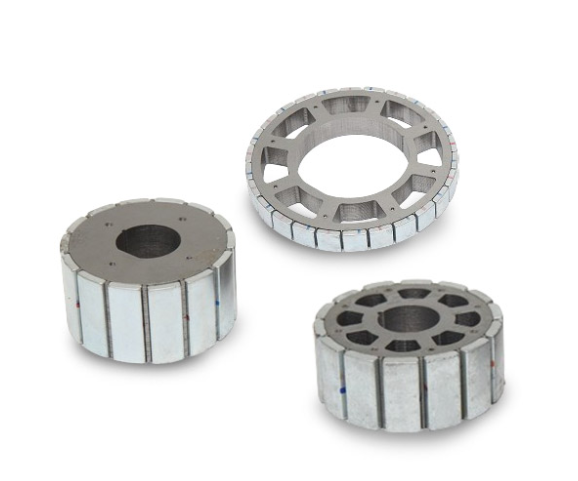
Frameless Torque Motors: Sizing for Real Loads
Torque sizing is what makes a frameless motor work well instead of overheating. Sunrise Electric Motor makes high-torque frameless motors like the 130BL at 7.23Nm and the 170 Series at 40Nm rated torque. These examples show the range you can get when you size for real loads. You have to match torque to speed, duty cycle, and thermal limits. A prototype checks your math before you order in wholesale amounts.
Calculating Continuous and Peak Torque
Continuous torque keeps the motor within its heat limit for as long as it runs. Peak torque gives short bursts for acceleration without going past the intermittent zone. You figure out RMS torque for changing duty cycles by weighting torque values by their time segments across the whole cycle. The formula is: RMS torque = square root of [(move torque squared times move time) plus (dwell torque squared times dwell time)] divided by total cycle time. For example, a 1-second move at 0.73 N·m followed by a 1-second dwell at 0 N·m over a 2-second cycle gives an RMS torque of 0.6 N·m. You use this RMS torque value to check motor heating and make sure the motor runs in the intermittent zone of the torque-speed curve. This method works for any direct-drive application with repeated move and dwell cycles.
Direct Drive Frameless Torque Motor Design Basics
Torque customization comes from rotor stack height and winding design. A taller stack and a better winding raise high torque output within the same diameter. Some frameless torque motors reach torque density up to 12 Nm/kg. This high torque density and compact size fits robot joints, AGV in-wheel drives, and rotary tables. Direct-drive frameless torque motor design gets rid of gears and belts. The result is zero backlash and smooth torque output for precise motion control.
Dimension | Direct Drive Frameless Torque Motor | Geared/Housed Servo Motor |
|---|---|---|
Control | Zero backlash, smooth torque output | Closed-loop with encoder and drive |
Design | Rotor and stator only; highly customizable | Enclosed unit with bearings and seals |
Integration | Requires alignment and external encoder | Plug-and-play, factory aligned |
Torque Density | Very high in compact size | High but less efficient |
Size & Weight | Slim and lightweight | Bulkier and heavier |
Cost & Lifecycle | Lower bill of materials, low maintenance | Higher unit cost, minimal integration |
Environment | Designer defines sealing | Pre-sealed and IP-rated |
Best Fit | Robot joints, gimbals, aerospace | CNC, packaging, conveyors |
Direct-drive motor technology brings other gains too. High torque density removes the need for gear reduction. Zero backlash and smooth motion help precision applications and cut down noise. Thermal management gets better when you build cooling into the machine frame. This lets the motor keep working without derating. Fewer moving parts mean higher efficiency and less maintenance. Compact construction allows thinner robot joints and lighter limbs. Long-term cost goes down with a maintenance-free design and no wear-prone couplings.
You have to match torque to speed, duty cycle, and thermal limits. A custom frameless torque motor design that ignores thermal management will fail under continuous load. Check every calculation with a prototype. Test your frameless torque motor technology under real conditions before you order in bulk. This step protects your margin and your schedule.
Dimension Customization for Frameless Integration
Frameless motors usually come in diameters from 30–100 mm, and frame sizes can go up to 254 mm. Sunrise Electric Motor's Frameless Motor models—60, 76, 80BL, 90BL, 115, 130BL, and 170 Series—show how much these sizes can differ. Since frameless motors have no housing, they fit right into the load. This setup makes it easier to customize dimensions for your specific integration and mounting needs.
Envelope, Stack Length, and Mounting Constraints
Stack length has a direct effect on power density. A longer stack gives you more continuous torque and rated power in the same diameter. The table below shows how stack length choices change performance across frame sizes.
Frame Size | Stack Lengths | Cont. Torque | Rated Power | Motor Constant |
|---|---|---|---|---|
60 mm (PowerCore) | 8.2 - 26.3 mm | 0.45 - 0.96 Nm | 30 - 51 W | 0.11 - 0.22 Nm/√W |
85 mm (PowerCore) | 8.2 - 26.3 mm | 1.21 - 2.69 Nm | 49 - 82 W | 0.22 - 0.47 Nm/√W |
115 mm (PowerCore) | 8.2 - 26.3 mm | 1.9 - 6.03 Nm | 74 - 125 W | 0.36 - 0.82 Nm/√W |
60 mm (XtremeCore) | 8 - 26 mm | 0.51 - 1.13 Nm | 64 - 142 W | 0.10 - 0.22 Nm/√W |
85 mm (XtremeCore) | 8 - 26 mm | 1.40 - 3.15 Nm | 234 - 409 W | 0.24 - 0.53 Nm/√W |
160 mm (XtremeCore) | 8 - 30 mm | 4.10 - 16.20 Nm | 255 - 1124 W | 0.45 - 1.25 Nm/√W |
You can pick from six frame sizes, each with three stack lengths and three windings per stack length. This lets you choose the best setup for power density and performance.
Motor constant goes up faster with motor diameter than with axial length. When axial length is tight, pick the largest-diameter, shortest-length frameless motor that still gives the motor constant you need. This choice gets the most torque possible within the axial limit. Large-diameter, high-Km motors often come with a big through hole. You can use this hollow-shaft design for bearing integration or to fit a coaxial holding brake, which shortens the axial length of the joint.
Rotor, Stator, and Feedback Integration
The air gap between rotor and stator assemblies is usually 0.5 to 2.0 mm. This gap needs machining accuracy and assembly steps that go beyond normal gear manufacturing standards. Mistakes can lower efficiency, raise cogging torque, or cause mechanical interference.
When you install it, both the axial alignment error and coaxiality between the stator and rotor must stay within 0.1 mm.
Feedback device choices for hollow-shaft frameless motors in direct-drive joints include single high-accuracy encoders, dual encoders, absolute encoders, and time-grating encoders. Dual encoders make up for gear wind-up and allow ±0.01° angular control. Absolute encoders let the joint position be known right after power-up without a homing cycle. Time-grating encoders keep arc-second accuracy and resist contamination for large or harsh joints.
Set the envelope, stack length, and mounting interface before you ask for a quote. These three parameters drive tooling, cost, and lead time. A clear specification stops redesigns and keeps your wholesale order on schedule.
Custom Frameless Motors for Wholesale: Pricing and Lead Times
Sunrise Electric Motor uses lower material costs in China and a lean sales setup to give you competitive wholesale prices. This helps a lot when you buy custom frameless motors for wholesale. Certifications such as RoHS, TUV, CE, CQC, and IEC give you a quality check point. These certifications prove that the motors meet international standards. You should treat them as a basic requirement for any wholesale order.
Volume Pricing Tiers and MOQs
You need to find out the minimum order quantities before you agree to a bulk order. Custom motor designs usually have an MOQ of 50 units, but the exact number can change based on how complex the design is.
Changzhou Sunrise Electric Motor Company says that for custom motor designs, its minimum order quantity is usually 50 units, but the exact MOQ can change based on how complex the design is.
Ask your supplier about volume pricing tiers. A larger quantity normally brings the unit cost down. You should also confirm tooling costs before you start. Tooling for custom windings or changed dimensions adds to your upfront investment. These costs affect your total landed cost per motor. Get a written quote that lists unit price, tooling, and any setup fees.
Prototyping, Tooling, and Production Lead Times
Prototype lead times are different for each supplier and application. You should plan for several weeks to several months before you get a working sample.
Source | Typical prototype lead time | Context |
|---|---|---|
Alva Industries | 16–20 weeks | Custom slotless frameless motor; lead time from confirmed specifications to first prototype. |
HansMotor | Around 8 weeks | Custom frameless motor; exact timing varies by application. |
Ask for a prototype or sample batch to check voltage, torque, and dimensions before full production. This step protects your margin. A prototype proves that your thermal management plan works under real loads. It also confirms that your precision needs are met. You can find design flaws early and avoid costly redesigns. Treat your supplier as a customization partner. Share your specification sheet and ask for feedback on feasibility. This teamwork shortens lead times and improves your final product.
Custom frameless motors for wholesale need voltage, torque, and dimensions to work as a team. A frameless motor that only has two of these will not work well. For frameless torque motors, write down the stator OD, rotor ID, stack length, torque goal, thermal path, duty cycle, and encoder setup. Ask Sunrise Electric Motor for a sample, and test it before you place a big order. The sample shows you the continuous torque, peak torque, and motor constant. Think of your supplier as a partner who helps you customize. Precision comes from the winding, stack height, and insulation class. Certified frameless motors with checked voltage, torque, and dimensions stop redesigns from happening. Frameless torque motors work best when you follow this careful approach. Your precision partner builds a frameless motor that fits your load. The right frameless motors give you high torque and torque density. This frameless motor lowers motor torque ripple.
FAQ
What voltage options do frameless motor suppliers offer?
You can pick 24V, 36V, 48V, or up to 325VDC. External drives give the power. Check your drive bus voltage first. This step makes sure your winding fits your system.
How do I size a frameless motor for my load?
Use RMS torque for your duty cycle. Compare peak values for acceleration. Test the result with a prototype before you order in bulk. This approach stops overheating and lost profit.
What is the minimum order quantity for custom designs?
Custom designs usually need 50 units. Your exact MOQ may change with how complex the design is. Ask about volume pricing tiers before you commit. This keeps your budget safe.
How long does a prototype take?
Prototype lead times are different for each supplier. Some suppliers take about 8 weeks. Others need 16–20 weeks. Ask for a confirmed timeline early. Test samples before production starts.


Recent News
1.What is a frameless motor?
2025-02-192.What are the components of a frameless motor?
2025-07-103.TOP Frameless Motor manufacturer in china
2025-12-264.Frameless Motor Wholesale Price Guide: How to Get the Best Bulk Discounts from Chinese Manufacturers
2026-09-215.Custom Frameless Motors for Wholesale: How to Navigate Voltage, Torque & Dimension Customization
2026-10-08


